Showing posts with label writing. Show all posts

Thursday, 4 August 2022

Summer Writing Series 5: How to keep writing

“The act of writing turns out to be its own reward.” Anne Lamott

I have this quote set as a reminder on my phone each Saturday morning. The words always make me smile and nod. “You’re so right, Anne.”

I usually write on Saturdays because I don’t have the energy after a day of work. I know there are writers who get up at 5 in the morning to get in their hour or 1000 words before work, but I have a demanding job that uses up every ounce of my body and brain. Fortunately, I have summers off. I do a lot of writing in the summer. And even though I’m not getting up at 5 in the morning to write (I get up at 5 in the morning to worry! Pointlessly! With no pay!) I’ve still managed to write 12 books in 25 years.

I look forward to my writing day throughout the week. It’s a bright star shining on my horizon. But when I open my eyes on Saturday the dread sets in. “I could skip today. I’m fine. I’ll still get the book done. I was stuck in a boring place. I’d rather read.” One or all of these thoughts might flash through my mind as I lay in bed and don’t get up.

Eventually, I make coffee, cook an egg, make toast, read something, and then dig out my computer. Sometimes I beat Anne Lamott’s quote and say, “You were so right, Anne!” Other times, the quote beats me, and I say “I'll get on that, Anne!” Butts in chairs. (That’s one of hers too.)

When I started writing, my computer took at least ten minutes to start. That’s a lot of time to waste. Now, in seconds, my computer is running, and my latest project is open. I quickly reread the last paragraph or two. “Oh yeah. . .”

Some days I get going immediately. Other days I take more time. I might need to do some research. Historical fictions takes more research. You might write a sentence and then think “If they didn’t have running water, how did they get water in winter? What were the stoves like?” It’s fine to research. Google is right there on your computer. Do some research. Get it right. Just don’t wallow.

“The act of writing turns out to be its own reward.” Even if I don’t have a great day of writing, I feel like I’ve accomplished something. I’ve moved the story slightly . On a good day, the writing inspires me. And on a REALLY good day,  I see the novel finished and shining as a ray of hope in this difficult world. Which is a pretty fine way to spend my time.

Tuesday, 26 July 2022

Summer Writing Series Part 4: Finding a Publisher or Agent

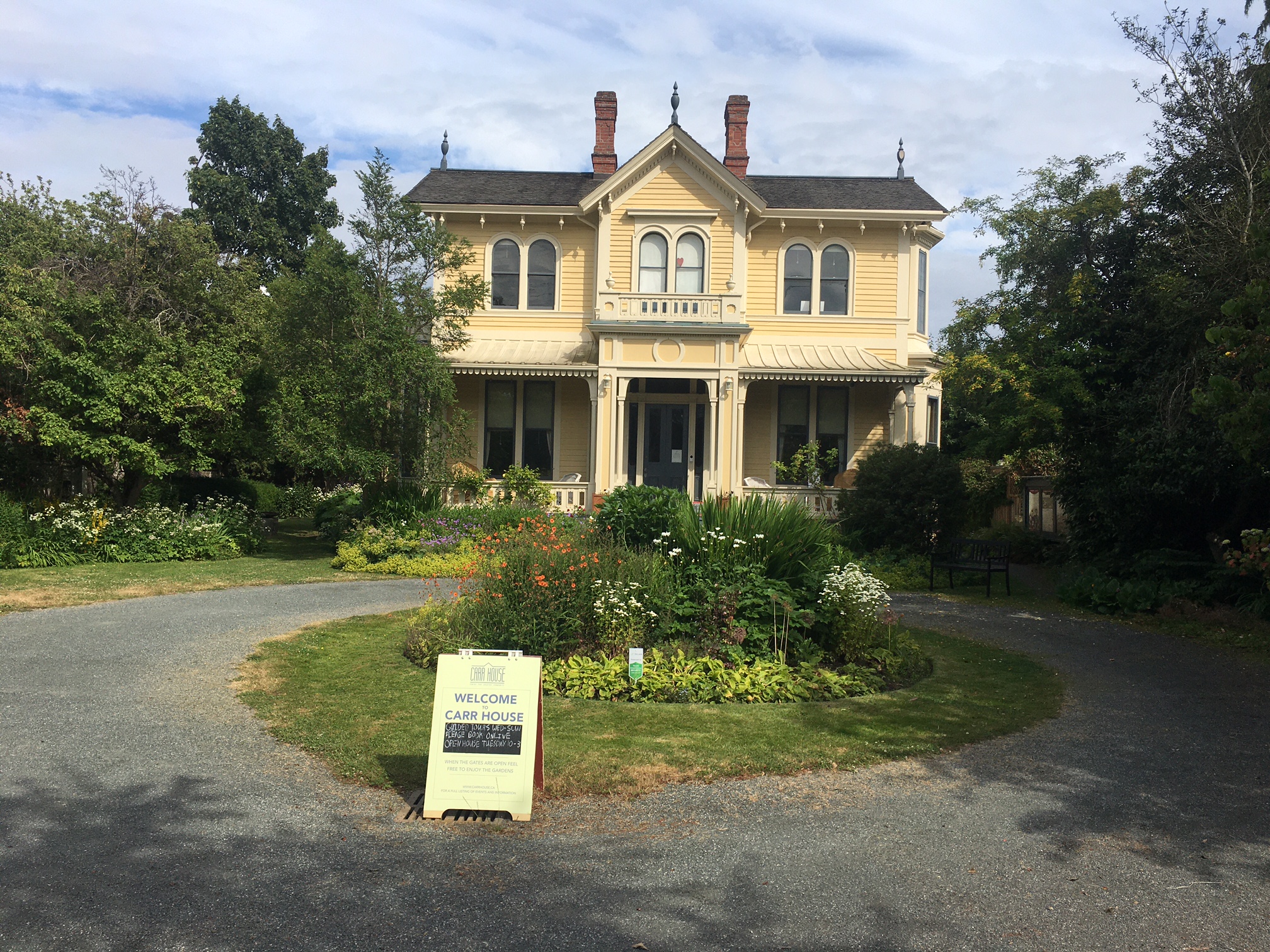
I recently took a trip to Victoria, BC, a lovely place to visit full of interesting historic sites. These two captured my imagination:

A statue dedicated to Scottish Poet, Robbie Burns

I've always loved reading and writing and dreamed of having my own books on a shelf one day. Here's a little bit of what I've learned about the publishing process.

Step One: Write a great query letter. Start with a general letter and then personalize it for each publisher, editor, and agent. A query usually needs the following:

·         A short bio – one to two sentences about yourself. This is your chance to sell yourself and your writing. Take your time!

·         Your working title and word count – Your novel must be finished before you send it out

·         A one-sentence pitch – sometimes called an elevator pitch. Sell your entire novel in one sentence! I find this extremely difficult.

·         A one-paragraph summary

·         A one- to two-page synopsis – I’m no expert. I used the Save the Cat format to write my last synopsis. I think it helped, but I still haven’t sold my book😊

Step Two: Research publishers, editors, and agents. I do general Google searches and include my genre and the year. The TCK website usually has great suggestions.

Step Three: Start sending and keep sending queries until you land an agent or publisher. Read submission guidelines carefully. Make sure to send exactly what they want and nothing more. For instance, some publishers want to see three sample chapters. These must be your first three chapters. Don't send more than three.

Also, Some agents and publishers do not accept simultaneous submissions (ie. When you send your work to one agent, they do not want you to send it to any other agents until they have accepted our rejected your work.) I don’t bother with these anymore.

Ideally, try sending three or more every week. I also like to send three more as soon as I receive a rejection. It used to take me a week or more to get over each rejection. Now, instead of wallowing, I turn this energy to researching other avenues.

Step Four: Start a new project. You are a writer, not a marketer, although marketing is extremely helpful to writers. You should become better at marketing yourself, but what I’m trying to say is that writing is your passion. Don’t stop writing! This is the part that feeds your soul and inspires you. Searching for a publisher or agent can be a crushing process. Writing something new should keep you grounded. If you need to take breaks from the query process, do it. Or, better yet, if you can afford it, hire someone else to do this for you.

Best of luck! I'd love to read about your experience in this journey in the comments below. Click here if you want to read more about my first experience landing a publisher.
Tuesday, 19 July 2022

Summer Writing Series: Revising

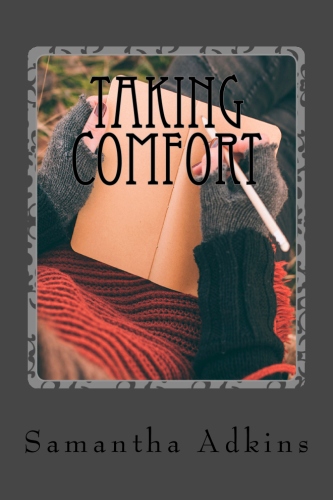
I am a huge believer in letting my work rest. I can’t see my work clearly for a few weeks after each draft. Now is not the time to let others read the whole thing. I might share a few chapters here and there. I find reading them aloud to trusted listeners very helpful. I also like to write a few short stories, blog posts, or even to start a new novel while I wait for the first draft to rest. If problems or ideas for revision pop up while I wait, I jot them down for later – in a notebook or as a note on my novel. These ideas can wait. Here is an example from my book Taking Comfort.


Originally, I called the book Canada Day. I checked off edits as I went!
A list of edits for the book that would become Taking Comfort

After the wait, I reread the whole novel slowly. I do a quick edit – spelling, extra words, wrong words, mistakes, anything that stands out. I also make notes, either directly on the manuscript or in my notebook, about things that need developing, or storylines I drop later. I know I will need to do another revision. I find it overwhelming to attempt these revisions the first time through. Again, it helps to let these ideas simmer, like a stew gathering flavour for hours on the stove. After the second draft, I wait another few weeks.

I have also created Timelines for my books as I edit. This helps me keep track of months, seasons and years. Here is an example from my book Expectations:


I even used the date for each event!


The third time through, I try to fix the problems I noted during the second draft. Often, there are still problems I can’t fix. I note these down to ask my Beta Readers. I pass the book onto trusted friends and writers after my third draft. More waiting while they read and answer my questions.

In my first novels, I found feedback difficult – embarrassed by my weaknesses. I don’t find this anymore, but don’t be surprised if it happens to you. Give it a few days. Then, you should be ready to accept the suggestions with more perspective. You may also find you need to use different readers for your next novel.

On the fourth draft, I don’t read the whole novel again. Instead, I go through and fix whatever my readers have noted. I really love it when they use Track Changes and I can go through and read their comments or simply accept changes made.

At this point, I usually start sending my novel out to agents and publishers. I’ve received some excellent tips this way. If I could afford it, I would send my book to an editor instead. Maybe one day.

I recently received some excellent tips from Leanne Morgena, Senior Editor at The Wild Rose Press. Thank you, Leanne! Here are some of the tips I am currently using to improve my books:

·         Search for passive phrases “it was, it is, it’s, there’s, there was” etc.

·         Don’t paraphrase dialogue

·         Look for times when I say “felt, heard, noticed, thought” Usually, these sentences should be rewritten to show rather than tell

       I use these tips to go through my novel in detail. After this point, I can’t do much else alone. I send it out. I hope for the best!

       Next week, I will share what I’ve learned about seeking a Publisher or Agent. 

Wednesday, 6 July 2022

Summer Writing Series Part 1: Novel Beginnings

I’ve been reading a lot of books about writing and I wondered – After 25 years of writing, do I have anything to say about writing? My favourite writing books are On Writing by Stephen King, Bird by Bird by Anne Lammott, Save The Cat by Jessica Brody, and The Right to Write by Julie Cameron. What could I add to their great advice? 

Here is part one of several posts about my novel writing process.

Questions

For me, ideas for novels have grown out of questions. Questions I can’t answer any other way. What would King David’s story look like in Modern Times? (After His Heart) 


What happened to Elizabeth and Darcy after Pride and Prejudice? (Expectations)

How did my grandmother manage teaching for a year with no salary? (Emmy in Harding)

These questions have to be big enough and interesting enough to sustain me for several years. This thought can be overwhelming, so I often tell myself to just write a short story (Expectations should have been a 20-page continuation for my sister’s 29th birthday.) 

I have several books started that fizzled out. The questions I asked in these books weren’t big enough. Or another question took over and I stopped writing those books. I still mean to return to Prairie Book Club one day!

In my next blog, I'll talk more about the First Draft. Subscribe now so you don't miss an article in my Summer Writing Series

Saturday, 18 June 2022

Barney Bentall & Lawrence Hill: An Evening of Reading and Song

Canadian musician, Barney Bentall sang and played with acclaimed author, Lawrence Hill on a cool, quiet Bowen Island evening in June. The event was hosted in The Hearth Gallery and Bowen Island Library Annex, an airy, chapel-like structure nestled amongst the Cedars and Alders of Snug Cove. 

Local writer and community leader, Pauline Le Bel, opened the event with a land acknowledgement for Bowen Island, Nexwlélexwm, where she taught us the Squamish word for "We Lift Each Other Up". 

Photo by Samantha Adkins

Then, Barney Bentall and Lawrence Hill took turns playing and reading from their life works. Cosmic Dreamer was a big hit with the audience and Hill says is as one of his favourites. A beautiful video of the song is available on YouTube:

Hill read from Beatrice and Croc Harry, The Illegal, The Book of Negroes and his work in progress about black soldiers building a highway in the Yukon during World War II. Hill is currently staying on Bowen Island to work on this book. As well as being an excellent writer, Hill is a skilled reader and storyteller.

But how are Bentall and Hill connected? Back in 1975, Lawrence Hill held a 45-pound typewriter on his lap during a flight from Toronto to Vancouver to study writing at UBC, much to his family's consternation. (They hoped he would become a doctor or a lawyer.) He rented a place near the university for $60 a month (!). Hill felt at home in a place with a trampoline, an Italian plum tree, and Sunday dinners where he was invited to dine each week, accompanied by a bottle of Baby Duck.

Hill remembers Bentall at 18, coming from Calgary to visit his girlfriend, now his wife, Kath whose family owned the house where Hill lived. Bentall built a fence during his visit, which greatly impressed Hill who doesn't consider himself very handy. Bentall says he's still building fences on his ranch in Northern British Columbia.

Hill and Bentall have great chemistry and I think we were all charmed by the stories and camaraderie. Bentall attributed inspiration for most of the songs he played to his wife Kath, who cheered him in the crowd. 

Being a pastor's wife, I was haunted by his song The Preacher. The song references Bentall's experience leaving his Baptist upbringing to "play the devil's music in bars." I was relieved Bentall told us his once rocky relationship with his Dad was repaired before he passed. The theme reminded me of my current work in progress currently titled Enough about two pastors families struggling to live up to the expectations of their congregations. Follow this blog to hear when Enough will be available.

"We life each other up" was certainly the right word for this uplifting and inspiring night. I was once again amazed by the talent and gifts housed on Nexwlélexwm.


Saturday, 19 January 2019

Poetry with Lorna Crozier

I had the absolute pleasure of attending a poetry workshop on my own little island last weekend
with Lorna Crozier. She's a wonderful teaching and enthralled us with the history of poetry, including several readings of poetry from different writers.
Lorna Crozier on
Wikipedia
Our writing assignment was to write a poem of 7 lines beginning with the final line from another writer's poem. We were to come to a stop at the end of each line. Here are my attempts:

Remembrance
(First line from Linda Gregg's "The Woman who looks for her lost sister she says" from Too Bright to See)
"No," she said, "It's too late for flowers Dear."
Yet, there they were.
Waiting, helpless, in my hand,
Clutched round thick stems.
Dripping milk poison down my elbow.
I pry my fingers from the thorns,
No one to help me.
Mouth drying, fingers oozing.
I lie down, panting, at her grave.

Rodeo Queen
(First line from Linda Gregg's "No More Marriages" from Too Bright to See)
They're never going to do that to me.
A sequined woman, shivering in mud.
Grasping a hockey stick,
That was never going to save me,
From a life of obscurity.
She rose, gasping,
With laughter, full of life.
A pig squealing out from under her.
The crowd cheers.

Sunday, 13 January 2019

Editing: Ripping up the Quilt

Editing is not my favourite part of the writing process. This time around, I am doing some major edits, thanks to help from different people I met at the Surrey International Writer's Conference. 

I began with Anne Perry's workshop, fittingly titled "Edits that hurt. . . and really help. It was an excellent talk on the editing process which included the following book-altering tips:
1. Sometimes you can cut an unnecessary character or blend two characters into one to make a more interesting character.
2. When you are making a change, just rewrite the whole scene. Don't try to cut and paste. (I have not always followed this advice, but I hear Anne Perry telling me this whenever I am attempting to cut and paste).

@genevievejude
Next, I pitched my novel idea to Dr. Genevieve Gagne-Hawes. I'll take a minute to elaborate: Attendees register for Pitch sessions ahead of time. They must arrive 5 minutes early to the ballroom.
The front of the room is filled with chairs and tables full of writers at the front. Along both sides of the room are the agents. The writers are sent to sit in chairs in the middle of the room where they wait to be called. When it is your turn, you line up in front of the agent to alert them they have one minute left with the writer who is seated before them. It is an interested opportunity to observe other writer's pitching. It is recommended that you do not bring your entire manuscript, but rather a one page synopsis or query letter. I observed many writers with their entire manuscript. I think it is just too tempting.

I pitched my novel to Genevieve who listened with an attentive smile. Then she asked me questions which directly pointed out my novel's biggest flaw. There's no hiding the problem. But, this gave me the chance to pick her brain for suggestions. My main take-away was to focus on the love story.

@owenlaukkanen
Next, I had a Blue Pencil Session with writer Owen Laukkanen. This is the chance to share your
writing with a published author and to discuss their thoughts about your work. Owen writes adventure thrillers and after researching his books, I figured he would find my book boring. I even attempted starting a murder mystery novel to entertain him, but I abandoned the pursuit before I got very far. I presented my three pages to Owen with an inward cringe. To my surprise, he did not fall asleep and instead encouraged my efforts, helped me tighten my dialogue and asked questions which inspired my to take the timeline of my story from two years and two major locations into one year and location.

I've had my work cut out for me since then. Merging characters and years is no small feat. Early into my efforts, I took on the view that my work now is like ripping apart a quilt, keeping the good parts and carefully stitching the quilt back together in a new and exciting pattern. Unlike the written feedback from the professional editor which stymied my work, meeting face to face with Genevieve and Owen has inspired me. I think it was the opportunity to ask questions and get to know them a little. I am grateful to be creating my tale again, one stitch at a time.

Friday, 7 December 2018

Anne Perry at Surrey International Writers' Conference 2018

I was so fortunate to attend the Surrey International Writers' Conference this year. By the time I
Anne Perry on Wikipedia
signed up, only Sunday was left as an option, but even a half day at this special conference is life-giving. There were so many highlights, but with my limited writing time lately, I want to make sure to remember the closing remarks from the talented and prolific writer, Anne Perry. I hope she doesn't mind my paraphrase of her words. I typed them into my phone on the Skytrain on the way home from the conference. Here's what I remember of her talk on the magic of writing:

"I want to share the best and worst moments. The Louvre at sunset. White roses in the moonlight and the sound of a Nightingale. 

"In my series set in WWI, I wondered what the chaplain would say to the man who saw his friend blow to bits the day before. I heard the story of a man at a conference who had lost his son to suicide. The worst situation imaginable. His minister visited every day and said nothing. Then every other day, then a couple times a week then as few times a month. Then I found what my character would say. 'You've been through hell and I will be here for you.' 

"A book is a companion during a bad time. Be there for your readers. Tell your story and tell is honestly. There was a homeless man at a conference in Portland who was spending his only $20 on my book. I need to be there for him. Like a hand in the darkness."

Thank you Ms. Perry for these strong and inspiring words. 

Tuesday, 24 April 2018

North Shore Writers Festival

I was fortunate to attend the North Shore Writers Festival at the West Vancouver Memorial Library this past weekend. It's an incredible opportunity and I am so grateful to the sponsor's for allowing anyone to attend for free. In fact, I'm amazed there aren't writers overcrowding the room, forcing the organizers to require registration.
northshorewritersfestival.com

www.soniagarrett.ca
I attended several of the Saturday events. The first was Writing Canadian Stories: A NSWA Workshop. Three writers shared their experiences writing about Canada. Sonia Garrett is a teacher and mother who wrote Maddie Makes a Movie, a novel for young readers. She was encouraged to set the book in the United States or elsewhere, but found the book wouldn't be the same without it's Canadian setting.

Sanford Osler wrote Canoe Crossings a book about the history of canoes in Canada. He was also encouraged to expand the setting of his nonfiction book, but found he had to keep his book in the country he knows and loves so well. I thoroughly enjoyed his reading based on the tale of obtaining a fiberglass "dancing canoe" used in the 2010 Winter Olympics.

Bernice Lever read a couple of her humourous poems and encouraged all writers of the wealth of Canadian material as well as the generous support of our government through grants and recognition of Canadian authors.

I then attended A Writer's Life with William Deverell. I was most impressed with his willingness to read from his first diary. He seemed to get a great kick out of rereading his earnest first attempts at writing and love. He also shared the story of getting into publishing through the Seal First Novel Award in 1979. He won $50 000 and was flown to Toronto to accept his prize and promote his book. The organizers were a bit worried about his "West Coast" appearance and the fact that he enjoyed a few drinks on the plane beforehand. They insisted he accept the prize in $20 bills and later promoted the book to booksellers and the press by sending copies of his book Needles complete with a hypodermic needle. Wow! Publishing certainly has changed.

At 1 p.m., there was a free lunch and Writers Cafe. Attendees were invited to eat with the authors. My friend and I sat with Sanford Osler and were able to ask him any question we liked. After this, we were a bit wiped and took a walk on the incredible Sea Walk in West Vancouver.

Finally, I returned for The Rule of Stephens with Timothy Taylor. Governor General Award nominee JJ Lee interviewed Taylor on the writing of his newest book and the stories behind the story. Lee is a warm and energetic interviewer with years of experience at the CBC.

It was an inspiring day and I hope to see you next year to participate in the 20th edition of the North Shore Writers Festival.


Monday, 23 April 2018

Interview with Jo-Anne Sieppert: Writer and Cover Designer

I met Jo-Anne Sieppert at a reading and book a few years ago. I was impressed by her wide range of writing interests and her personability. I then had the pleasure of getting to know her better through different writing groups and events and have worked with her on a number of cover projects. Thanks to Jo-Anne for agreeing to an interview on my blog.

Jo-Anne created the cover for the audio version of Expectations. You can find her design page here Coversanddesign
Cover by Jo-Anne Sieppert
She also created this cover for Taking Comfort.
Cover by Jo-Anne Sieppert

Samantha Adkins: How did you come to be interested in both writing and designing book covers?

Author Photo:
Courtesy Jo-Anne
Sieppert
Jo-Anne Sieppert: I’ve always been a writer, cliché I know. I was just never good at talking that much. Growing up in England you don’t talk about feelings or emotions, so I wrote stories or poems. I never thought I would do anything with them. My first book was just a little story I would tell my youngest at bed time to help him sleep. I used his nightmares and turned them into adventures he and his brother went on. When they would ask me to tell them again I knew I needed to write them down because I’d forget. Eventually the little stories turned into 110,000 words, 
then 4 books.  
           
When my first book was released (Nytstars) back in 2008, the cover the publisher selected was awful! It didn’t represent the story in anyway. So, I tried making my own cover, which the publisher excepted. This represented the story but was equally as terrible. I was embarrassed to show my book to anyone. I knew I had more books to write and that if I wanted them to look as good on the outside as I knew the story was on the inside that I needed to learn how to do them right. I went to school for web and graphic design. I discovered I really loved making book covers and I wanted to help other authors love their covers as much as I did.

SA: How are the two crafts similar and different?  


JS: Writing and cover design are similar because they both tell a story, only one uses words, it has sentences, paragraphs, pages and pages to get the whole story out. You have time to describe things, grab a hold of your reader and take them on an adventure. Cover design tells a story in images. Not the whole story, just enough to make you want to read more. Sometimes, you get to use images to draw the readers in and entice them. Other times you only have a design and title to catch their attention. Just as in a writing, it’s all in the details.

SA: Do you have a favourite book cover? (One of your own)


JS: My favorite book cover is for my book Brother. I love the way it tells the story from the face in the background looking over the silhouette of the couple.
  
SA: Where do you find inspiration for book covers? Does this differ from your writing inspiration?
           
Brother available on Amazon
JS: When I come up with a book cover idea for my own books it often comes to me as I’m writing. There’s a certain spot in the story, which varies for each book, and that’s the part that needs to be the cover. When I do them for other authors I ask them first if they have an idea that they want to see as the cover. If they don’t I ask them about the book. The part that they get the most excited about, that’s the cover. That’s the part that they wrote the story around.

SA: What is the best thing about being creative? What is the worst? 
           
JS: This is a loaded question. How long do I have? Lol. If I have pick just one, I’d say it’s having an outlet. A way to release all the thoughts, images, colours, and noises that swim around in our head all the time. It’s hard to focus on day to day with all the extra chaos in there. Being creative means we get to release all that into to something brand new, something that has never been seen, heard, or read before.
           
The worst part, there’s never enough time for it.

Here's a video of Jo-Anne reading from her book Aberrant:

Youtube Channel: It's My Story and I'm 
Sticking to It


Tuesday, 17 April 2018

The Way Before You Suddenly Clears

Today's title comes from Sarah Young's book Jesus Calling on December 21. She writes "Sometimes the road you are traveling seems blocked, or it opens up so painfully slowly that you must hold yourself back. Then, when time is right, the way before you suddenly clears -- through no effort of your own."

I was struck by these words when I first read them and they return to me as I've watched my writing coming to publication in the past few months.

My book Expectations is now available as an audiobook through Audible and Amazon. I couldn't be happier with the wonderful narration done by Liz Winstanley and the cover by JS Design.

Expectations has also been published as an ebook and paperback book with City Lights Press. I love the new cover!

I am so pleased to have my latest book After His Heart published recently with CKN Publishing. I really didn't want to self-publish this one and am so happy CKN wanted to help me get it out there!

I feel truly blessed and thankful. But I also feel a little bit embarrassed for tooting my own horn. Thanks for reading! 

Saturday, 24 February 2018

Ski Haiku

We woke up to the most beautiful winter scene this morning. It took some hunting, but I dug out my cross country skis and was inspired by these Haiku winners at the VanDusen Botanical Garden in Vancouver to try a winter Haiku.

Swish trickle quiet
Frozen puffy snowy pond
Sliding over seams


Sapphire light frozen
Cutting down a winter lane
Frosting on cedars


Sweet morning snowdrops
Slicing down island lanes
Bliss frosty morning


Wednesday, 7 February 2018

Finding a Publisher

On January 2, I received an email from the editor at CKN publishers. This is not an uncommon occurrence for me. For about 20 years, I've been sending out short stories, poems and manuscripts. For the first years, snail mail was the only option for submissions -- painfully slow and expensive. Then email submissions became more common and now I send my writing almost exclusively via the internet.

As usual, when I receive such emails, I took a breath, preparing myself for rejection, but then came
these beautiful words "We are interested in moving forward with publishing. . ." What?! I reread the email a few times to make sure I had everything right. Plus, they wanted to publish not just one but five of my books.

The editor sent along an 11 page contract for my perusal. We were travelling back from Christmas holidays and I read it on my tiny phone screen at the airport while we waited for our plane.

Two days later, I wrote back to accept the offer. Then I waited in suspense for the documents to arrive by mail for my signature. The package arrived on January 22 and that's when I finally believed it was real. That they would send the documents via Priority Mail meant they must be serious.

Since signing the contract, I have submitted an author photo and book blurbs for the five books. Today I received the first look at some of the book covers. Can't wait to share those! It's been a pleasant experience so far and I look forward to sharing the rest of the journey soon.

Saturday, 23 December 2017

Book Review: Room of Marvels

amazon.com
On one of our pastor's first Sundays at our old church, he said he and his wife wanted to reclaim the word and notion of "imagination". As a fiction writer, I was inspired and encouraged by his bold statement from the pulpit. I often felt my dabblings in creative writing were something to be slightly ashamed of.

Sometime afterward, I considered imagining heaven would be a worthy pursuit. I was excited to try, but once I began I came up with almost nothing. Golden streets, a big city, angels. I wanted to imagine, but I couldn't get far. I gave up. Unlike James Bryan Smith in Room of Marvels, I didn't consider meeting the people there. Smith does and in doing so, has written a poignant book. While his book is fiction and doesn't claim to be fact, it is a fascinating imagining of what heaven will be like.

The story behind Room of Marvels makes the novel even more important. Smith himself experienced the deaths of a close friend, his young daughter and his mother within two years. Understandably, he was left with deep grief and unanswered questions. This book became his therapy.

In the book, Tim, the main character, attends a silent spiritual retreat to help him cope with the deaths of his best friend, daughter and mother. He struggles with the stillness and silence but is encouraged by his spiritual director to rest and meditate on a passage in Luke. After a couple of days, Tim is still feeling desperate. He prays that God will speak to him and falls asleep. Then he dreams of a cottage where he meets his old barber, a kind and friendly man who died several years ago. The story continues with him being led through different exercises by various important people in his life which strip away guilt, shame, his mask of perfection and tendencies to control. These people and experiences help prepare him for entrance into the room of marvels.

I enjoyed this book much more than I expected. It reminded me of other books including Paul Bunyan's The Pilgrim's Progress, The Last Battle by C.S. Lewis and Henri Nouwen The Genesee Diary. It's a little bit raw in places, but it is heartfelt and deeply moving. I recommend it as a kind of friend to someone walking in grief or as a guide to someone wishing to better understand the process. 

Wednesday, 20 December 2017

Write Brain Workbook Prompt Post #2

I posted yesterday about using prompts from The Write-Brain Workbook. Here's another. I've use italics to show the prompt provided.

Very Touching
From The Write-Brain Workbook
by Bonnie Neubauer


Late night city streets were the perfect backdrop
For ice skating across the smooth pond.
Sharp edges threatened to trip my companion,
But I sailed across the frozen surface
In circuitous formation,
Winding past pitted marks.
My mind flowing with memories
Scratchy scarves and mittens,
Pebbled lakes and rivers.
I choked on tears.
My partner noticed nothing,
Stumbling across the pond,
Staring at his feet.

I recently learned at a workshop on Critical Creativity with Amy Burvall that writing prompts work because "Creativity works better with parameters.

Tuesday, 19 December 2017

Writing Prompts from The Write-Brain Workbook

amazon.com
I am so grateful my artist-friend Sylvia finds so many ways to encourage and spark my writing endeavours. For my fortieth birthday, she gave me The Write-Brain Workbook by Bonnie Neubauer. My Right-Brain wanted to tuck in and complete one a day right away, but work and other writing projects stymied my initial efforts and I shelved the book after February. Yesterday my poet-friend Susan suggested some small writing prompts over the holidays might be better than taking a total break. "I know just the thing," I said.

In true writer style, I feel the need to share even these small attempts. Here's one for today. I plan to share a few more.

"Describe the ideal place to write"

The post card arrived. I sat in the cafe along a cobbled street. The strains of a violin drifted from the window above, just a hind of Debussy. My tiny cappuccino cup clinked when I lifted it to sip the fragrant blend. I set it down and read the short inscription. "Dear Sam, We were overjoyed to see your latest book at the stand in Bath. We plan to join you soon. Am now delving into After His Heart." I flip the card, studying the photo of my mentor's former residence and return to my pen. I quickly disappear into my imaginary world of suspense.

Wishing you creativity over the holidays.


Wednesday, 29 November 2017

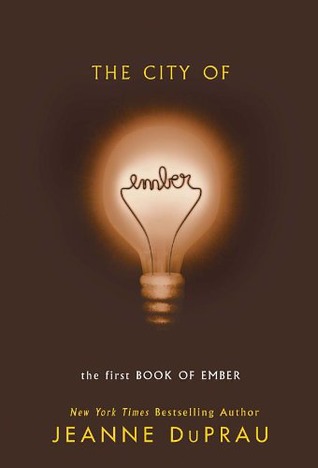
Book Review - The City of Ember

goodreads.com
This is one of those books I wish I had written. How does someone write a book that is as interesting to adults as it is to children? DuPrau has created empathetic characters in Lina Mayfleet and Doon Harrow that are both innocent and mature.

Her imagined post-apocalyptic world is both ingenious, depressing and sweet. The science is present without dominating the story-line. I think it is her strong plot, however, that made it impossible to put this book down. The elements of suspense and mystery are strong. This is the perfect book for a child and parent book club. 

Monday, 20 November 2017

Book Review: The Last Neanderthal by Claire Cameron

goodreads.com
What I've really enjoyed about Claire Cameron's books so far (see my review of The Bear here), are her ideas. I can imagine her  wondering about something interesting and suddenly it grows into a story. In The Last Neanderthal, Cameron begins wondering about the fact that Neanderthals and modern day humans share a small percentage of DNA. So how did that first meeting go? 

Cameron tells the story through two lenses, first through Rose, an archaeologist who makes an incredible discovery in France and then through Girl, the very Neanderthal Rose uncovers. Cameron's writing style is fresh and clear. She creates empathetic characters and her stories are never predictable. I get the feeling she really cares about her characters.

My one question, as a fellow mom who has watched the movie The Croods countless times, is if this movie inspired her in any way. The opening scene, Girl, Big Mother and Him really reminded me of the Croods. I could be wrong. 
Maybe it was just settled there in her subconscious. Haha. My book Taking Comfort was partially inspired by Veggie Tales. Can't help wondering if this happens to other parent-authors!

Saturday, 2 September 2017

Meeting Louise

Louise Penny appears at St. Andrew's Wesley Church on Monday, August 28
I have been a big fan of Louise Penny since my friend Dianna recommended her books in 2015. I've read the first nine books and am working on book ten. I've written several reviews for her books including Still Life, Bury Your Dead, The Murder Stone, and How The Light Gets In. Penny has the gift of writing intriguing, intelligent, suspenseful and compassionate murder mysteries. They also have some surprisingly funny moments. So, when I got an email from Vancouver Wordfest saying she was coming to town, I had to go.


I invited my friend Sue who is a fellow Penny fan and we arranged to go together to St. Andrew's Wesley United Church on Monday, August 28. It was a sweltering evening, somewhere around 30° Celcius. The church filled up early with hundreds of Penny fans. Everyone looked as excited as I felt to hear from this talented Canadian author. 

The moderator for the evening welcomed us to "The city's largest sauna" and he wasn't far off. Women in every direction fanned themselves with any paper they could find. But it was worth it to hear from this well-spoken former CBC journalist. 

Here are some of the things I will remember about the evening:

Louise thinks of her characters through the lens of Helen Prejean's quote "People are more than the
Some of the incredible stained glass at St. Andrew's Wesley
worst thing they have ever done in their lives." She said this gives her compassion for her characters.

Louise said writers need to write their first draft with their playful, creative selves. Leave the critic for the revisions.

Penny does research to a certain point and then makes the story work for her, even if she doesn't get all of the facts right.

Her husband died about a year ago. Louise said she took 6 weeks to two months off of writing, but when she returned to her book, she found it comforting and healing. Her husband is the inspiration for her main character, Chief Inspector Armand Gamache and it feels like, through continuing to write his character, her husband remains close.

I am so glad I went and I am thankful I still have more Louise Penny books to read. 

Wednesday, 9 August 2017

Book Review: Bird by Bird: Some Instructions on Writing and Life

I was looking for On Writing by Stephen King to give to my Dad for Christmas. The book store did
goodreads.com
not carry the book, but the bookseller insisted Bird by Bird by Anne Lamott was even better. "Even my friends who don't write loved this book. It's hilarious!" With no time left to shop, I took her word for it and bought the book for my Dad.

A year and a half later, he lent me the book. (I'll admit, I pestered him about it ever since I gave it to him!) While I wouldn't say it is better than On Writing, I would say it is as good as On Writing. They are, of course, writing about different experiences and genres, but they had some striking similarities. Both are recovering alcoholics. Both encourage you to write every day and both are excellent storytellers.

I highly recommend this book to all writers. It gives excellent advice on why it is important to write, even if you never get published. I gives writing dignity far beyond publication.

It reminded me that writing a book as a gift is a wonderful idea. My book Expectations was a birthday gift to my sister. I think my other books were gifts to myself; books I wanted to read. I want to try Lamott's suggestion to write a book as a gift to a writer I really enjoy reading. She also recommended writing letters to friends and family, describing important things in detail to be remembered. Lamott had beautiful, poignant things to say about writing, reading and life throughout her book. While I recommend you read it for yourself, here are a few gems:

"Ever since I was a little kid, I've thought that there was something noble and mysterious about writing, about the people who could do it well, who could create a world as if they were little gods or sorcerers." (xxvii)

(Lamott's answer to why she writes.) "Then I add that other than writing, I am completely unemployable." (xxviii)

"Books help us understand who we are and how we are to behave." (15)

"Almost all good writing begins with terrible first efforts." (25)

"The writer is a person who is standing apart, like the cheese in 'The Farmer in the Dell' standing there alone but deciding to take a few notes." (97)

"I honestly think in order to be a writer, you have to learn to be reverent. If not, why are you writing?" (99)

"Becoming a writer can also profoundly change your life as a reader. One reads with a deeper appreciation and concentration, knowing now how hard writing is, especially how hard it is to make it look effortless." (233)

"Writing and reading decrease our sense of isolation. they deepen and widen and expand our sense of life: they feed the soul." (237)